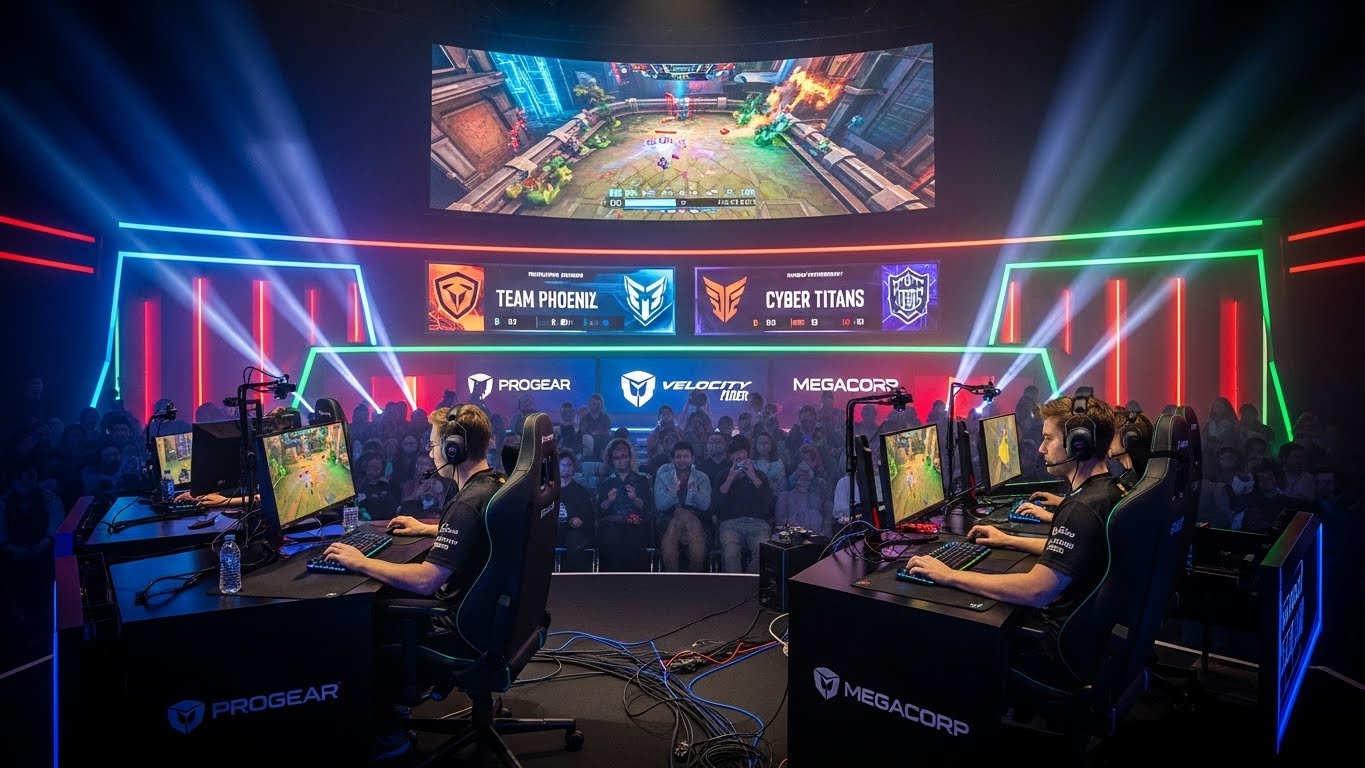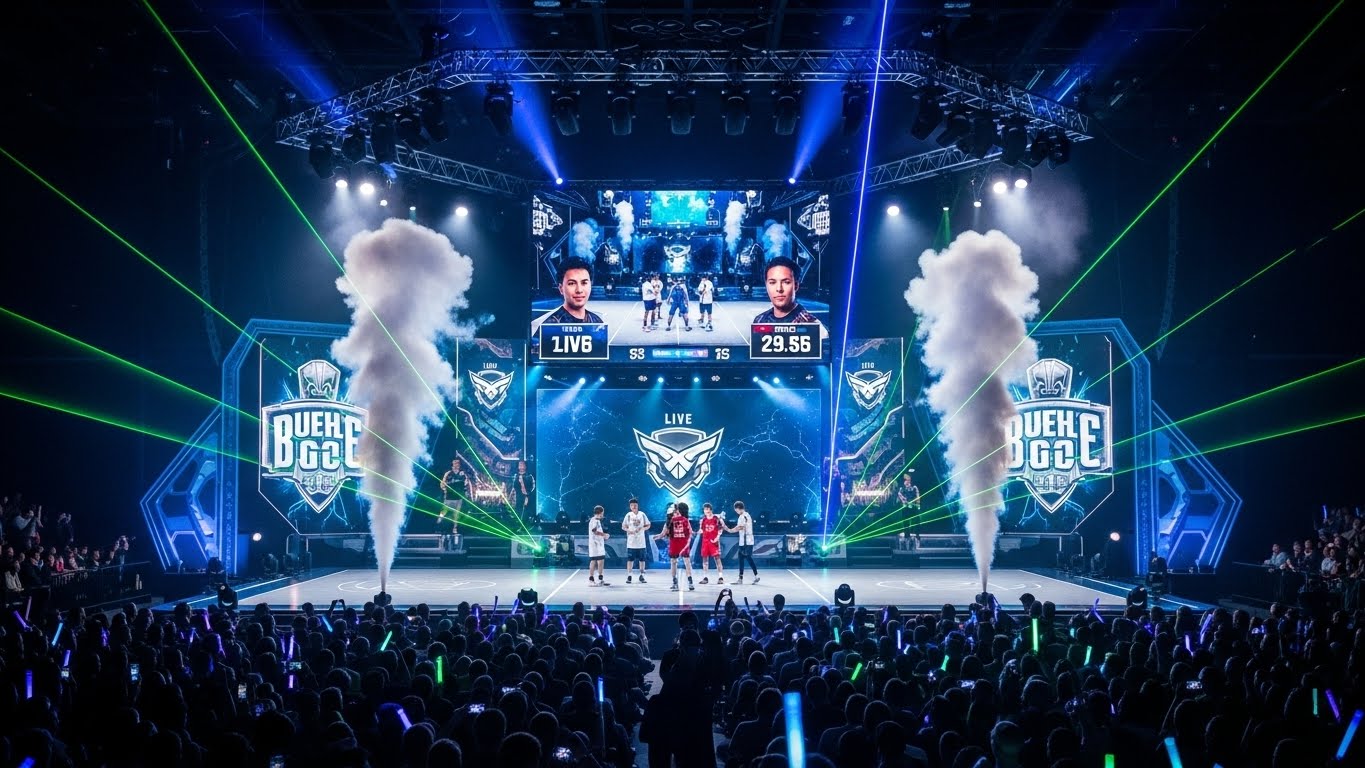

Esports has grown exponentially over the last two decades, evolving from small-scale gaming competitions to a global multi-billion-dollar industry that commands the attention of millions of fans worldwide. Today, esports represents a thriving cultural and professional movement, combining the thrill of traditional sports with the innovation of digital gaming. Players, teams, organizations, and brands are all part of an intricate ecosystem that sustains and fuels the growth of this fast-evolving phenomenon. Whether it’s the appeal of intense competition, the sense of community, or the allure of the big money, esports has found a way to captivate millions in a way that no one could have predicted when the first gaming tournaments were held.
In this blog post, we will explore how esports evolved from a niche pastime into a worldwide entertainment juggernaut, the various elements that contribute to its success, and what the future holds for this ever-expanding digital sports industry.
The Early Days of Esports: From Hobby to Competition
While the term “esports” may seem like a recent invention, competitive gaming has existed since the inception of video games themselves. The early days of esports were informal, small-scale gatherings, often organized by passionate gamers who sought to test their skills against others. The very first recorded competitive gaming event dates back to 1972 at Stanford University. The event was called the “Intergalactic Spacewar Olympics,” and it was held for the game Spacewar, which was one of the first video games ever created. Although this event had no substantial prize money or media attention, it laid the groundwork for future competitive gaming.
The next leap for esports came in the mid-1990s when the internet began to become widely accessible. This era saw the emergence of iconic multiplayer titles such as Quake and StarCraft. In particular, StarCraft, released by Blizzard Entertainment in 1998, became a cornerstone of competitive gaming, especially in South Korea, where the game’s national popularity was so widespread that it formed the foundation for the country’s esports industry.
In 1997, a landmark event occurred with the Red Annihilation tournament for Quake. It was one of the first major tournaments in competitive gaming and offered the winner a Ferrari. This event proved that competitive gaming could be taken seriously and showed that there was a potential market for large-scale esports tournaments. With the internet facilitating online play, players no longer had to gather physically to compete in tournaments, thus broadening the reach and accessibility of esports on a global scale.
Esports in the Early 2000s: The Birth of International Tournaments
By the early 2000s, esports was beginning to take shape into something more professional and structured. The launch of Warcraft III and Counter-Strike in the early 2000s added new dimensions to competitive gaming. The introduction of online matchmaking allowed gamers to play and compete in tournaments around the world without needing to be in the same room. The game Counter-Strike, in particular, became a major catalyst for esports’ rise. Its combination of team-based strategy and skill made it a prime candidate for esports tournaments.
During this period, the first major international esports organizations and events began to emerge. Events like the World Cyber Games (WCG) and Electronic Sports World Cup (ESWC) were established, providing platforms for players to compete for substantial prizes and international recognition. These events helped lay the foundation for esports’ current structure by offering competitive play on a global scale.
Perhaps one of the most significant moments during this period came with the rise of StarCraft in South Korea. The country adopted StarCraft as its national game, and the subsequent development of professional leagues, such as the Korean e-Sports Association (KeSPA), elevated esports into the mainstream. StarCraft tournaments in South Korea were broadcast on TV, and the players achieved celebrity status, a phenomenon that would continue to grow across the world in subsequent years.
The Rise of Streaming and Social Media: A Game Changer for Esports
In the mid-2000s, the gaming and entertainment industries underwent a transformative change with the rise of streaming platforms. One of the most significant developments for esports came with the launch of Twitch in 2011. Twitch allowed gamers to stream their gameplay in real-time, creating a direct channel of communication between players and their audiences. This opened the door for esports to flourish as both a spectator sport and a live entertainment medium. Gamers and esports enthusiasts could watch their favorite players, teams, and tournaments from the comfort of their homes.
Streaming services also allowed for more interactive content, where viewers could engage with streamers, contribute to discussions, and support their favorite players through donations and subscriptions. For esports, streaming became a crucial tool for building a global fanbase. It transformed the way fans could experience esports, enabling them to watch tournaments live, access highlights, and enjoy on-demand content.
Twitch’s success also proved that there was a viable business model behind gaming and esports content. The platform attracted millions of viewers and provided streamers with a monetization avenue through subscriptions, advertisements, and sponsorships. Some of the most prominent esports stars, like Ninja (Tyler Blevins) and Shroud (Michael Grzesiek), built substantial followings and turned streaming into a career.
The integration of social media into the esports ecosystem also played a significant role. Platforms like Twitter, Instagram, Reddit, and YouTube allowed players, teams, and fans to interact in new ways, building online communities and boosting the visibility of competitive gaming.
Esports Today: A Thriving Industry with Professional Leagues and Global Competitions
By the 2010s, esports had firmly established itself as a legitimate form of competitive entertainment. The growth of League of Legends (LoL), Dota 2, CS:GO, and other games with competitive scenes saw the formation of professional leagues that mimicked traditional sports. Games like League of Legends, developed by Riot Games, created an entirely new paradigm for esports by organizing regional leagues, such as the LCS (League of Legends Championship Series) in North America, the LCK (League of Legends Champions Korea), and the LEC (League of Legends European Championship).
The LoL World Championship, often referred to as Worlds, became one of the largest annual esports events globally. The 2018 LoL Worlds final attracted more than 100 million viewers, making it one of the most-watched sporting events in history. The event was held in front of tens of thousands of live spectators at an arena, while millions more watched online. The success of League of Legends has been pivotal in showing that esports can be as big and as lucrative as traditional sports.
Following the success of League of Legends, other games like Dota 2 and Fortnite began holding massive international competitions. Dota 2, for instance, launched The International, its annual championship tournament with one of the largest prize pools in esports history, reaching over $40 million in 2021. The tournament’s popularity and significant prize money have made Dota 2 one of the most lucrative esports titles in the world.
Fortnite, a battle royale game released in 2017 by Epic Games, brought esports to a new level of accessibility. With its free-to-play model and global appeal, Fortnite attracted millions of players and viewers. The Fortnite World Cup held in 2019 featured a $30 million prize pool, with the winner, 16-year-old Kyle “Bugha” Giersdorf, taking home $3 million. The event also brought esports to a younger demographic, highlighting the way in which games like Fortnite are reshaping the competitive gaming landscape.
The Business Side of Esports: Sponsorships, Merchandise, and Media Rights
Esports has not only created career opportunities for players but also for organizations, event organizers, broadcasters, and advertisers. One of the driving forces behind the success of esports is the sponsorships and partnerships that help fund tournaments, leagues, and teams. Global companies such as Intel, Red Bull, Coca-Cola, and Nike have made significant investments in esports, realizing that the market offers a massive opportunity to engage with a young, tech-savvy audience.
Sponsorship deals between esports organizations and major brands are common, with companies supplying everything from gaming hardware and apparel to energy drinks and gaming peripherals. These partnerships have enabled esports to become a self-sustaining ecosystem, where events are funded by both the revenue from sponsorships and ticket sales, as well as through media rights and broadcasting deals. The popularity of esports has also opened up new revenue streams, with esports tournaments being broadcast live on television, streaming platforms, and social media channels.
In addition to sponsorships, merchandise sales play a vital role in the revenue generation of esports teams and organizations. Jerseys, hats, posters, and other branded items are sold to fans who want to support their favorite teams. Top esports organizations have established their own merchandising operations, capitalizing on their team’s global following.
The Future of Esports: Virtual Reality, Mobile Gaming, and Global Expansion
The future of esports is looking brighter than ever, with exciting new technologies and opportunities on the horizon. Virtual Reality (VR) and Augmented Reality (AR) are expected to play a significant role in the future of esports. As VR technology becomes more accessible and sophisticated, it could redefine the way esports competitions are experienced. Players and fans alike may soon be able to experience esports events in immersive, first-person perspectives, making the viewing experience more dynamic and engaging.
Mobile gaming is another area of rapid growth, especially in regions like Asia. Mobile esports titles like PUBG Mobile and Free Fire have attracted millions of players and viewers, creating an entirely new competitive ecosystem. The accessibility of mobile games