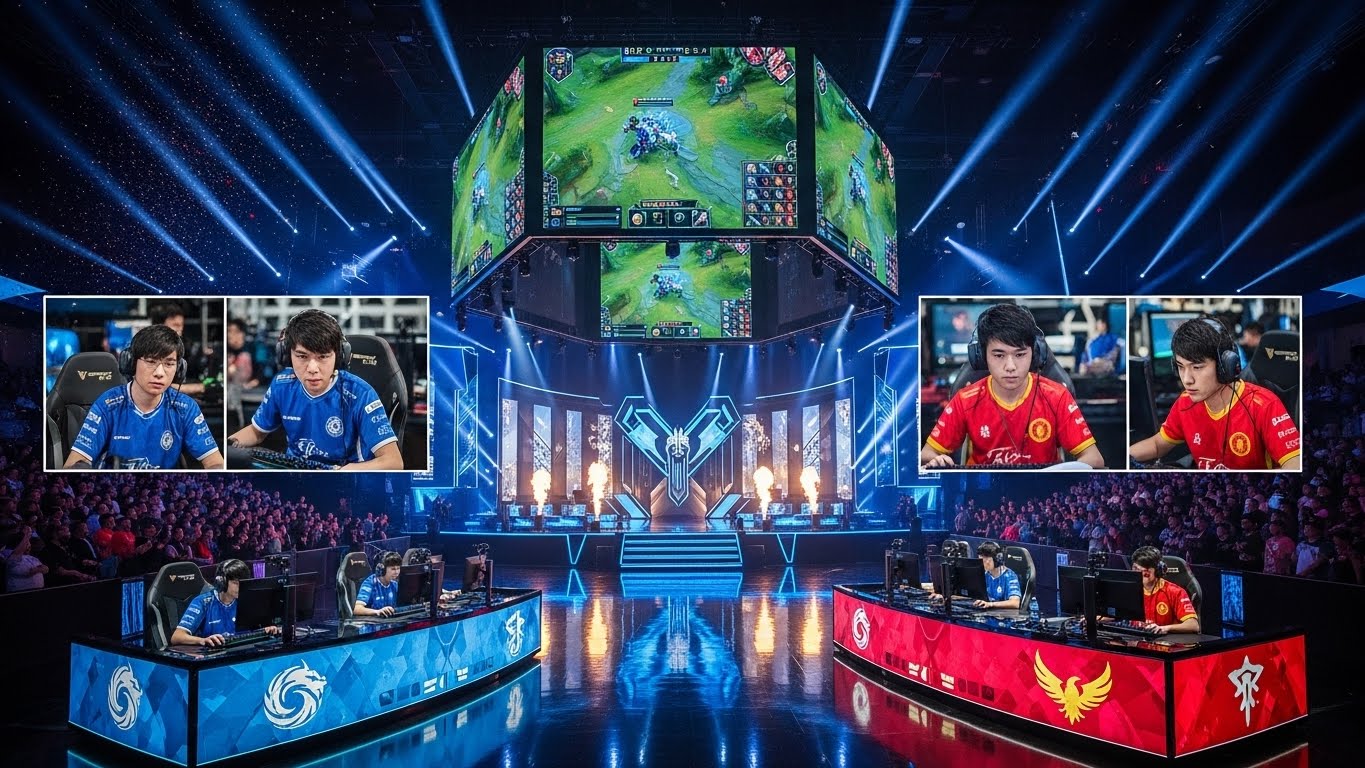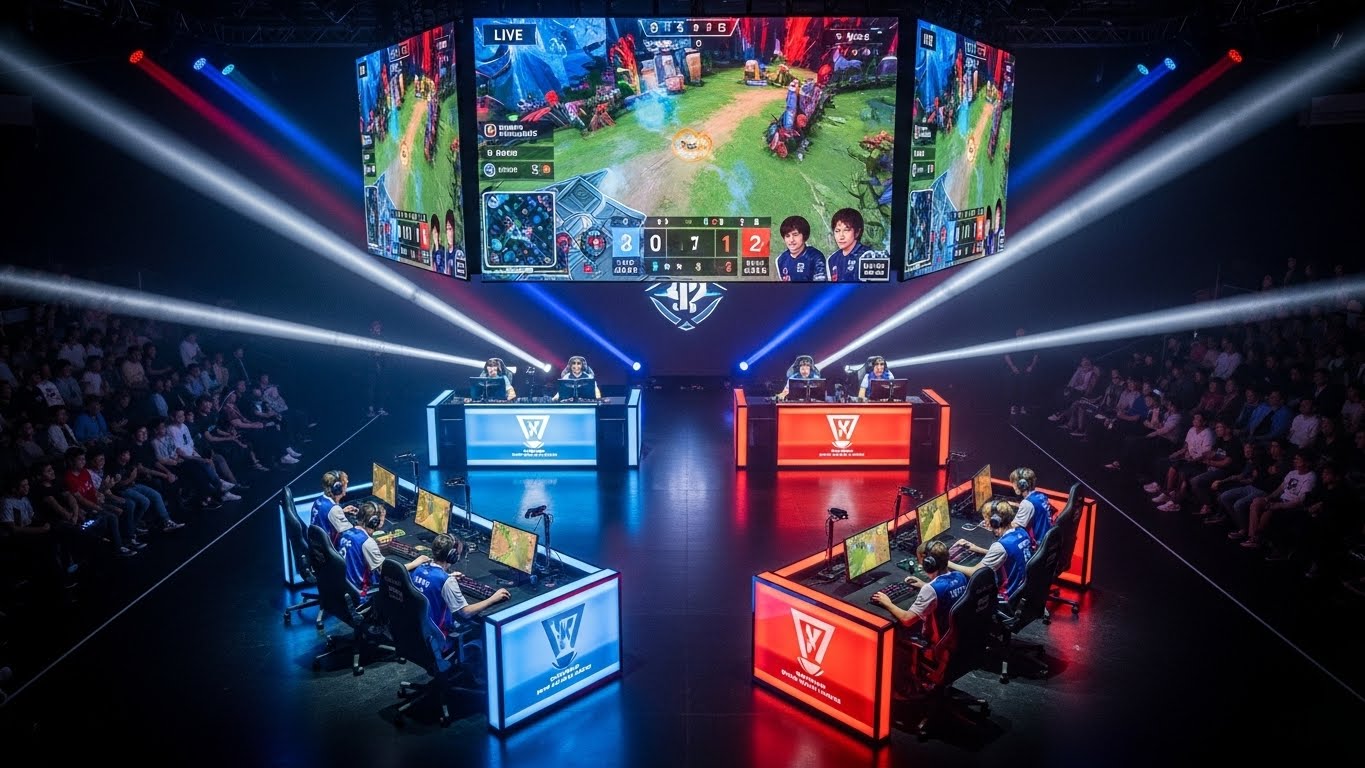
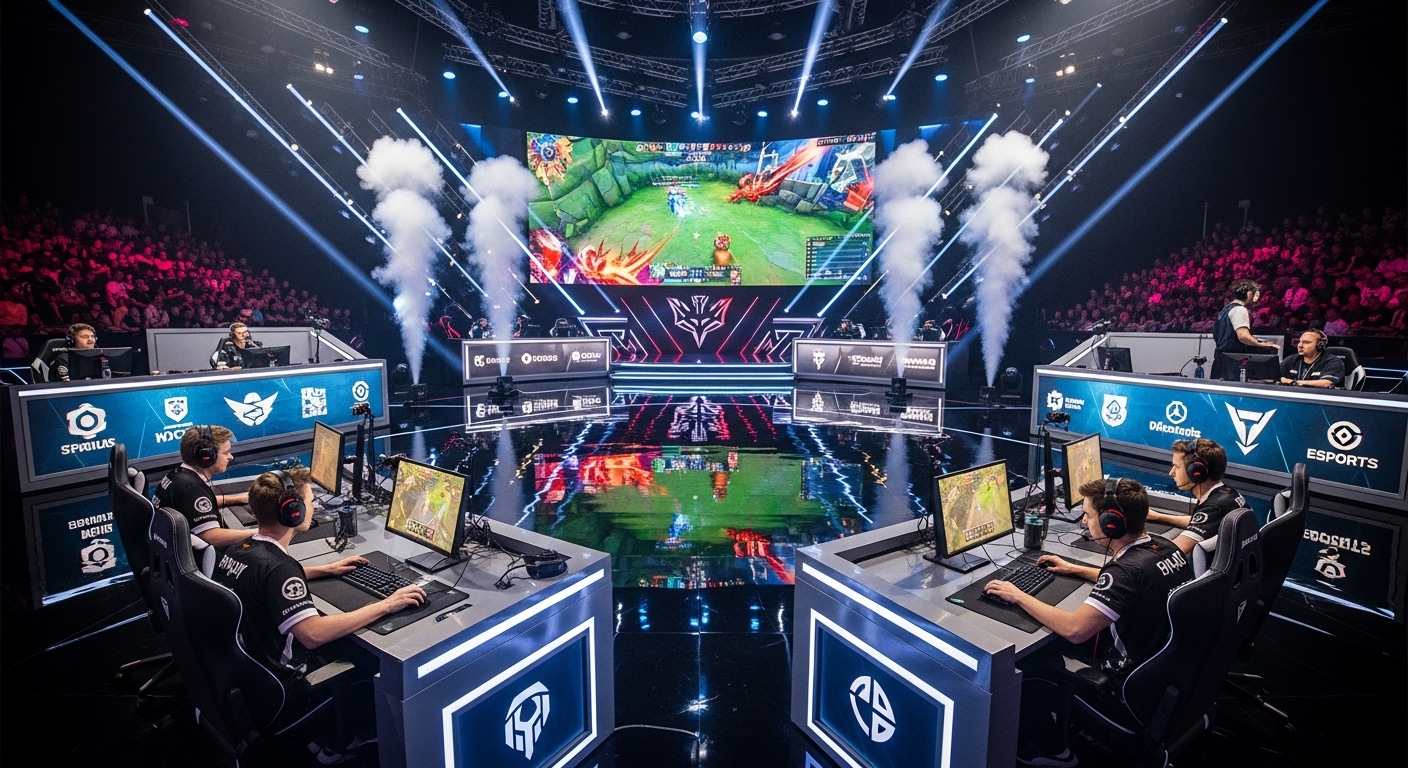
In the span of just two decades, competitive gaming, or what we now call esports, has transformed from a small underground scene into a global powerhouse of entertainment, culture, and business. What began as friendly matches between hobbyists in small computer cafes has evolved into packed stadiums, multimillion-dollar tournaments, celebrity gamers, and a fanbase that rivals traditional sports. Esports is no longer a subculture. It is a movement that has redefined the meaning of competition, fandom, and digital entertainment in the twenty-first century.
This blog explores the journey of esports — from its humble origins to its modern-day dominance — and examines how technology, culture, and industry have shaped its unstoppable rise.
The Early Roots of Esports
The idea of competitive gaming can be traced back to the 1970s, when the first video games began to emerge. In 1972, students at Stanford University competed in a game called Spacewar!, an early computer game that laid the foundation for future competitions. The prize for the winner was modest — a one-year subscription to Rolling Stone magazine — but the event symbolized something much bigger: the beginning of organized digital competition.
During the 1980s, arcade gaming flourished, and with it came a new wave of competition. High scores on arcade machines became badges of honor. Players would spend hours, sometimes days, trying to etch their initials onto the leaderboard screens of games like Pac-Man and Donkey Kong. Magazines began publishing national leaderboards, and for the first time, players could gain fame through their gaming skills.
By the early 1990s, as home consoles and personal computers became more widespread, gaming competitions took a more organized shape. Nintendo hosted the Nintendo World Championships in 1990, touring across the United States to find the best players. It was a bold idea that hinted at the potential for gaming as a spectator event. However, it was the rise of the internet in the mid-1990s that would truly revolutionize the competitive gaming landscape.
The Internet Revolution and the Birth of Online Competition
The late 1990s marked the turning point for gaming competitions. With the internet connecting players across the globe, the concept of online multiplayer gaming exploded. Games like StarCraft, Quake, and Counter-Strike became the battlegrounds for a new generation of competitive gamers.
South Korea emerged as the epicenter of this revolution. In the early 2000s, the South Korean government invested heavily in high-speed internet infrastructure, which gave birth to the phenomenon of PC bangs — gaming cafes where players could gather to compete. Television channels began broadcasting live matches, complete with commentators, analysis, and cheering fans. Professional gaming teams were formed, and players became national celebrities. The StarCraft scene in South Korea became legendary, with players like Lim Yo-hwan, known as “BoxeR,” achieving rock-star status.
This era marked the true beginning of esports as a professional pursuit. It was no longer just a hobby — it was a career. Teams secured sponsorships from major companies, tournaments offered cash prizes, and fans filled arenas to watch their favorite players in action.
The Global Expansion of Esports
While South Korea was pioneering professional gaming, the rest of the world was not far behind. Europe and North America soon developed their own esports ecosystems. Games like Counter-Strike, Warcraft III, and Dota gained massive international followings. Online tournaments allowed players from different continents to compete without ever meeting in person.
The creation of organizations like the Electronic Sports League (ESL) and Major League Gaming (MLG) helped professionalize the scene even further. They introduced standardized rules, regular seasons, and structured competition formats similar to traditional sports. This provided stability for players, sponsors, and fans, and gave esports a formal identity on the global stage.
As streaming technology advanced, esports entered homes through new platforms. The emergence of live-streaming sites allowed fans to watch their favorite teams and personalities in real time, creating a direct connection between players and audiences. Suddenly, gaming was no longer a private experience — it was a shared, communal spectacle.
The Rise of the Streaming Era
Streaming changed everything. It gave esports its audience, its voice, and its heart. Platforms dedicated to live broadcasting gaming sessions turned amateur players into influencers and professionals into global stars. Viewers could interact with their favorite gamers through chat, learn new strategies, and feel part of an interactive community.
Streaming platforms also became the primary venue for broadcasting esports tournaments. Major events could now reach millions of viewers worldwide without relying on traditional television. For example, championship finals for games like League of Legends, Dota 2, and Counter-Strike: Global Offensive attracted audiences rivaling those of the biggest sports finals.
The live chat, replays, highlight reels, and global accessibility made esports truly borderless. Fans in Brazil could support teams from Europe, while players from Southeast Asia could compete against Americans in real-time. The digital age had truly democratized competition.
The Games That Defined Esports
Esports owes much of its success to the games that captured the imagination of players and viewers alike. Certain titles became cultural landmarks, defining eras and shaping competitive formats.
In the early 2000s, StarCraft: Brood War dominated the scene, particularly in Asia. It was a game of strategy, speed, and precision — a perfect showcase of skill. Counter-Strike became the face of first-person shooter competition, known for its tactical depth and team coordination. Dota and later Dota 2 brought the Multiplayer Online Battle Arena (MOBA) genre to prominence, with millions of dollars in tournament prizes.
Then came League of Legends, a game that reshaped esports infrastructure. It introduced structured leagues, franchised teams, and consistent seasonal play, mirroring traditional sports like football or basketball. This professionalization gave esports legitimacy in the eyes of investors, sponsors, and mainstream audiences.
In recent years, games like Fortnite, Valorant, and Apex Legends have continued to expand the landscape, appealing to younger audiences and embracing new forms of entertainment such as influencer-driven tournaments and crossover events with pop culture.
Esports as a Career and Industry
What was once a hobby has now become a legitimate profession. Players can earn six-figure salaries, sponsorship deals, and tournament winnings. Teams have coaches, analysts, and nutritionists. Managers negotiate contracts and brand partnerships. Esports organizations function much like professional sports franchises, with scouting systems, player development programs, and media departments.
But it’s not only the players who benefit. The industry has created thousands of jobs across broadcasting, event management, marketing, game development, and journalism. Universities around the world have started offering esports scholarships, and academic programs study its business and social impact.
The financial scale of esports continues to impress. Major tournaments like The International for Dota 2 or the League of Legends World Championship offer prize pools that reach tens of millions of dollars. Brands from outside the gaming world — car manufacturers, tech companies, and even luxury labels — now sponsor teams and events, recognizing the enormous marketing potential of a digitally native audience.
The Cultural Impact of Esports
Beyond money and competition, esports has reshaped modern culture. Gaming has become a shared global language, connecting people across boundaries of geography, age, and background. The esports community thrives on inclusivity, creativity, and collaboration.
Streaming personalities have become cultural icons, blending gaming with entertainment, comedy, and storytelling. Esports events now feature music performances, elaborate stage designs, and cinematic storytelling that rival major entertainment productions. The lines between gaming, sports, and pop culture have blurred.
Esports has also influenced fashion, music, and even education. Streetwear brands collaborate with teams on exclusive merchandise drops. Musicians perform at tournament finals. Schools establish esports clubs to teach teamwork, leadership, and strategic thinking. It’s a cultural ecosystem that transcends the screen.
The Role of Technology in Esports Evolution
Technology has always been the backbone of esports. Every major leap in gaming hardware, internet infrastructure, or digital media has propelled competitive gaming to new heights. High-refresh-rate monitors, precise gaming peripherals, and powerful graphics processors have allowed players to perform at their peak.
Meanwhile, innovations in streaming and broadcasting have improved the viewing experience dramatically. Virtual cameras, real-time overlays, and data analytics bring spectators closer to the action. Augmented and virtual reality are beginning to reshape how fans engage with matches, promising an even more immersive experience in the future.
Artificial intelligence and data analysis are also playing a growing role. Teams use advanced analytics to study opponents’ strategies and refine their tactics. Developers use AI to improve matchmaking, detect cheating, and maintain competitive balance. The fusion of technology and competition is what keeps esports at the cutting edge of modern entertainment.
Esports and Traditional Sports: A New Rivalry or Partnership?
For years, debates have raged about whether esports can be considered a “real sport.” Traditionalists argue that it lacks the physical component of athletics, while supporters point out that esports demands mental agility, reflexes, teamwork, and dedication equal to — if not greater than — traditional sports.
Over time, the lines have blurred. Major sports organizations have entered the esports space, buying teams or launching leagues for digital versions of their sports. Athletes from basketball, football, and racing have become investors or participants in esports ventures. Some stadiums now host both football matches and esports tournaments.
In many ways, esports complements traditional sports rather than competes with them. Both celebrate skill, passion, and community. Both bring people together around shared excitement. The difference lies only in the medium — one is physical, the other digital. But the emotion is universal.
Challenges Facing the Esports Industry
Despite its meteoric rise, esports is not without challenges. Player burnout, inconsistent tournament structures, and financial instability in some organizations remain major concerns. The industry’s youth also means it is still learning how to handle issues like mental health, diversity, and fair play.
Another ongoing challenge is sustainability. Prize pools and sponsorships have grown rapidly, but some teams struggle to maintain profitability. The reliance on specific games and publishers creates a unique ecosystem where control is centralized. A game developer can change rules or discontinue support, instantly impacting the livelihood of thousands of professionals.
Moreover, as the audience grows younger, maintaining ethical standards in marketing and gambling-related sponsorships becomes crucial. The industry must balance growth with responsibility, ensuring that the excitement of esports never overshadows the well-being of its community.
The Future of Esports
Looking ahead, the future of esports appears brighter than ever. New technologies like virtual reality, blockchain integration, and artificial intelligence promise to redefine how games are played and experienced. Mobile esports, particularly in regions like Southeast Asia and India, are opening doors for billions of new players.
Esports will likely expand beyond traditional games into new genres and hybrid experiences. We may see crossovers between virtual sports and real-world competitions, interactive fan participation through metaverse-style platforms, and even AI-assisted coaching systems.
Education and infrastructure will also continue to develop. Schools and universities will incorporate esports not just as entertainment but as an educational tool that fosters teamwork, problem-solving, and digital literacy. Governments and organizations will recognize its potential as both an economic driver and a form of cultural expression.
Ultimately, esports will continue to evolve alongside technology and society itself. It is not a fleeting trend but a reflection of how humanity adapts its competitive spirit to a digital world.
The Human Element Behind the Screens
At its core, esports is not just about games — it’s about people. Behind every player, commentator, organizer, and fan lies a story of passion, dedication, and dreams. Whether it’s a teenager practicing tirelessly to qualify for a world championship, a fan staying up late to watch their favorite team, or a developer creating the next great competitive title, the spirit of esports is driven by community.
The magic of esports lies in connection. It unites people across continents who may never meet but share the same heartbeat when a final play decides the match. It is proof that competition can be as thrilling in the digital world as it is on the physical field.
Conclusion: The Game Has Only Just Begun
Esports has come a long way from dimly lit arcades and college tournaments. It has grown into a global spectacle that commands the attention of millions and generates billions in revenue. But beyond the numbers and lights, esports represents something deeper — the evolution of play, creativity, and human ambition in a connected world.
As technology advances and generations change, esports will continue to redefine entertainment, sportsmanship, and culture. The players of today are the pioneers of a new frontier, and their legacy will inspire future generations to dream, compete, and connect in ways never imagined before.
In the end, esports is not just about winning or losing. It’s about passion, progress, and the unyielding drive to be better — one game at a time.